Monday, April 16, 2012

Lose the Big Belly

Ask anyone with HIV what they fear most, and you're likely going to get the answer, "I don't want to look like I have AIDS."  Often, friends and clients tell me, "I don't want to have the sunken cheeks, the skinny arms and legs, lose my butt, and have the protruding abdomen that looks like I have a basketball under my shirt."

Looking like you have HIV can be devastating and debilitating.  Some people may never notice or care, but to others, they have "the look."  It can hold you back socially and professionally.  It can keep you at home when you should be getting out with people.

For persons with this condition, diet and exercise, though recommended, do not usually reduce it much.  That's because the lipodystrophy (change in body fat) that I'm referring to is hard fat that surrounds your internal organs, not a layer of fat on the outside, like love handles.

This week I will be writing about a new treatment for excess abdominal fat inHIV-infected people with lipodystrophy.  It is called Egrifta or tesamorelin.  It's a daily shot that you give yourself which can reduce the belly fat significantly.  It is not a treatment for HIV.

Yours,
Bill

Friday, April 13, 2012

What Medicines are Recommended for Starting HIV Treatment?

This week flew by quickly.  I'm starting a new fellowship to reduce HIV in African Americans, and I'm very excited about it.  I will be telling you about it in weeks to come.  It's with The Black AIDS Institute.  What a great organization!
I wrote about when to start HIV medications earlier in the week.  Today I want to tell you which medications to start.  Actually, these are the recommendations from HIV experts working with the Department of Health and Human Services, and they were just updated.

Here are the suggested regimens for treatment-naive people with HIV, which means no previous HIV medications.
  • Atripla, a one pill a day combination of efavirenz/tenofovir/emtricitabine
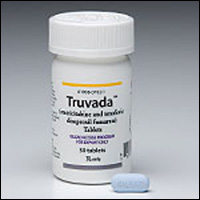
  • Reyataz (atazanavir), boosted with Norvir (ritonavir) and Truvada (tenofovir/emtricitabine)
  • Prezista (darunavir), boosted with Norvir (ritonavir) and Truvada (tenofovir/emtricitabine)
  • Isentress (raltegravir) and Truvada (tenofovir/emtricitabine)
Only four regimens are preferred.  Does not mean that other combinations cannot be used?  No, and some other regimens are considered alternative or acceptable regimens.  In some instances, a different regimen might be the best one for you.

How does your doctor find the best regimen for you?  First of all, he or she should talk it over with you and find out what's most important to you.  For instance, some people prefer to take a single pill, and this would narrow down your choices immediately.  For others, the ability to take all of their medications once a day is important.  Your provider will also consider your other medications and the possibility for interactions, other health conditions, and your resistance test results.

Have a great weekend, y'all!
Yours,
Bill

Monday, April 9, 2012

I'm still digesting my Easter dinner today, but had a wonderful weekend with my partner and family.

There are a few other instances when you should start HIV medications immediately, no matter what your CD4 count is:
  • If you are pregnant, to prevent infection of the baby.
  • If you have had an AIDS-defining illness, such as Pneumocystis jirovecii pneumonia (used to be known as PCP pneumonia), wasting syndrome (extreme unintentional weight loss), or Kaposi sarcoma (purple splotches on the skin).
  • If you HIV-associated kidney disease
  • If you also have hepatitis B and HIV.
Tomorrow:  What are the recommendations medications to treat HIV in someone never on medication?

Have a great Monday!

Yours,
Bill

Friday, April 6, 2012

When to Start HIV Medications, Continued

HIV Particle

Today I'm continuing the discussion on when to start ART (antiretroviral therapy) for HIVAccording to most recent US DHHS Guidelines, most people with HIV should start ART.  If your CD4 (helper count) is less than 500, starting therapy is strongly recommended.  If your CD4 is greater than 500, starting is also recommended, although this remains somewhat controversial until more studies are completed.

In addition, if you are over the age of 50, it is now recommended that you start ART regardless of CD4 count.  This is because of a greater risk of non-AIDS complications in this age group.  Additionally, the body's immunologic response to ART may not be as robust in this age group.

  • You should also start on HIV medications if you are:
  • pregnant
  • have a history of an AIDS-defining illness
  • HIV-associated kidney disease
  • infection with both HIV and hepatitis B.

Tomorrow, more on AIDS-defining illnesses.

Wishing you health!
Bill

Thursday, April 5, 2012

When Starting Medications for HIV, When is the Right Time?

Starting HIV medication is a big decision when you are HIV positive.  Some people say start right away, others say wait.  What is the right answer?

The answer is:  It depends!

According to the recently updated DHHS Treatment Guidelines for adults and adolescents with HIV, treatment is now recommended for everyone with HIV, regardless of their CD4 (helper cell) count:

1.  When your CD4  is less than 350, start treatment as soon as possible-evidence clearly supports starting medications.
2.  When your CD4 is 350-500, starting is recommended.
3.  When your CD4 is greater than 500, starting is recommended, although some questions remain.

  • In addition, you should start after you have insurance or a way to pay for your medications, because they are costly.  
  • You must be ready and committed to taking HIV medications daily-breaks in therapy are not recommended. 
  • If you are sexually active, taking HIV medication will reduce the risk that you will transmit HIV to your parter, so this may also influence your decision to start medication.

Talk to your provider about the right time to start HIV medication.  There are other times when you should start HIV medication, and I'll write about them tomorrow.
Yours,
Bill

Wednesday, March 7, 2012

HIV Medication Adherence Tip #6: Develop a Routine

Daily adherence with HIV medications  is the key to bringing your viral load down to low or undetectable levels, which will  dramatically improve your chances of staying healthy and living a full life.  I have noticed that the clients who struggle the most with taking daily medications are the ones who live without routines. 
Here is my latest tip for improving your HIV medication adherence:

Tip #6:  Develop a daily routine or ritual for taking your HIV medications.

Do you go to bed a different time every night?  Get up whenever you wake up?  Eat meals at various times when you feel like it?  Vary you schedule every day?  If this describes you, you will likely have difficulty remembering to take HIV medications every day.

It is best to take HIV medications at about the same time every day, within a four-hour window.  You don't want to give your virus a chance to grow, which is what happens when there is not enough medication in your blood stream to shut it down.  This can happen when you vary your dosing times by too many hours, say 6 AM one day and midnight the next day.

If you find that you are forgetting your medications, develop a routine for success.  Here are some tips:
English: YULU, Nicaragua (Aug. 23, 2008) Lt. A...
Image via Wikipedia.  I hope your medication
 set-up does not look like this!

1.  Take your medications at meal time, and establish a set time for eating daily.  Breakfast and dinner time are usually good times to take medications.   Not only will you have better lab results for your HIV, you will also feel better throughout the day, because you are providing your body the fuel it needs to perform its best.

Here's a sample morning routine:
6:30 AM  Get up, shower and dress.
7:00 AM Morning coffee, eat breakfast, take medications
7:30 Work or school

2.  Take your medications at bedtime, if this is easier for you.  Keep your medication organizer near your toothbrush where you will see it.

3.  Have a favorite TV show that you watch every day?  You could take your medications while watching the program, but you have to do it every day.

4.  Is there somebody you chat with every day?  You could take your medications while you talk to them.  You could even ask them to remind if you to take your medications.

5.  Create a checklist for each day and make a check when you take your medications. Keep the checklist visible, such as on the refrigerator or bathroom mirror. Keep track of how you do from week to week, and strive for missing less than 1-2 doses per month.

They say if you can do something every day for a month, it will become a habit.  Taking your medications every day is a very good habit to develop.  That's it for today.  Have a great weekend!

Wishing you health in 2012!
© William L. Larson, Pharm.D. 2012

Tuesday, March 6, 2012

Adherence Tip #5: Choose Your Pharmacy Carefully

Daily adherence with HIV medications  is the key to bringing your viral load down to low or undetectable levels, which will dramatically improve your chances of staying healthy and living a full life.  Simple, right?  Not really.  Here is my latest tip for improving your HIV medication adherence.

Tip #3:  Use one pharmacy, preferably one that specializes in HIV.
Make your pharmacy staff allies in helping you to succeed with your HIV medications.  Use a single pharmacy for all of your medications.  This cuts the chance of taking interacting medications, because the single pharmacy will know about all of your medications.  It also makes it easier to keep track of refills and insurance changes.

Pharmacy
Image by sonyaseattle via Flickr
I suggest you choose your pharmacy carefully.  Some pharmacies do a better job of caring for people with HIV than others.  Why is this?  If you go to a pharmacy that serves few people with HIV, they are less likely to have your medications in stock.  This could result in a delay in getting your refills, which might cause you to run out of medication.  Remember, the goal of HIV therapy is no missed doses.

Another reason to choose a pharmacy specializing in HIV is the pharmacist will have a better grasp on HIV and its current treatment.   For example,  HIV is controlled with a combination of three or more medications in most instances, and your pharmacist must give you the complete regimen every month for it to be succesful.

Walgreens
Image via Wikipedia
In Minneapolis where I live, I often refer people to Walgreen's Specialty Pharmacy and Bioscrip.  Other pharmacies also do a good job with HIV, but I know these two pharmacies give excellent service.  Not every Walgreen's is a specialty pharmacy, nor do they all HIV expertise, however, so ask the pharmacist before giving them your prescriptions.  Walgreen's has certified 500 of their pharmacies in the US as HIV Centers of Excellence.

Here are some ways to help your pharmacy give you the best care:
1.  Carry your insurance information so that your are charged correctly.
2.  Call in your refills a week in advance, if possible.
3.  Take advantage of free delivery service if available, especially if you tend to run out of medications.
4.  Ask if they will alert you when it is time for refills.
5.  Walgreens has an app which allows you to order refills from your iPhone.

I hope this tip helps you with your medication adherence.  Stay tuned in coming days for more tips.
Wishing you health in 2012!

© William L. Larson, Pharm.D. 2012