Showing posts with label HIV. Show all posts

Monday, August 20, 2012

Mobilizing Black America to end HIV/AIDS

  spent a week in Los Angeles  with a group of HIV/AIDS coalition leaders training and getting up to speed on effective ways to build coalitions in his local Minneapolis community.  Black American men are among the most devastated by the HIV/AIDS epidemic and leaders are putting in action ways to mobilize around this in order to stop the spread of the disease.

Larson joined a group of 24 others from around the nation and especially from southern metropolitan states, the most affected regions, to get this training being delivered by the Black AIDS Institute.  Founded in May of 1999, the Black AIDS Institute is the only national HIV/AIDS think tank focused exclusively on Black people. The Institute's Mission is to stop the AIDS pandemic in Black communities by engaging and mobilizing Black institutions and individuals in efforts to confront HIV. The Institute interprets public and private sector HIV policies, conducts trainings, offers technical assistance, disseminates information and provides advocacy mobilization from a uniquely and un-apologetically Black point of view.  

 On the final day of training, William along with other participants laid out a proposal for mobilizing his local community.  "I learned how to write an action plan for a mobilization event which we will hold in Minneapolis in December.  The action plan was based on my problem statement which came from a needs assessment based on surveys of community members, providers, and leaders of Traditional Black Institutions," Larson stated.

Larson is calling on all local support to assist him executing his action plan which intends to educate 50 participants and test at least 10 participants.  "Encouragement and support from the community will make the difference.   I have a lot of work to do between now and December, but with the help of my coalition, which I am building and strengthening, it will all come together.  My target population is Black gay men in Minneapolis,"  Larson said.

William Larson, Pharm.D. is a pharmacist in the Minneapolis metro and a contributing medicine editor for BBINT Magazine


Tuesday, May 1, 2012

Effectiveness of Egrifta for Treating Big Belly Syndrome from HIV

This week I am writing about a new treatment for excess abdominal fat in HIV-infected people with lipodystrophy.  It is Egrifta or tesamorelin.  It’s a daily shot that you give yourself which can reduce belly fat significantly.  It is not a treatment for HIV.  Egrifta works by stimulating growth hormone receptors in the pituitary to produce growth hormone.   

In two clinical studies, the abdominal fat, also called visceral adiposity, was reduced by 14-18% in patients continuing Egrifta for twelve months.  The mean waist circumference was reduced by 1.3 to 2.6 cm during weeks 26-52.  This is a reduction in .5-1 inch in your waistline.

This is not a huge reduction.  Some people will experience greater results, however.  I tell my clients taking it that they still need to exercise regularly and carefully watch what they eat. 

The exciting thing about Egrifta is that clients who remain on it for at least six months usually report that their clothes start fitting differently and that they feel better about their appearance.

A down-side of Egrifta  is that it is not a permanent treatment.  If you stop the medication, your belly likely returns.
Wishing you health,
Bill

Monday, April 16, 2012

Lose the Big Belly

Ask anyone with HIV what they fear most, and you're likely going to get the answer, "I don't want to look like I have AIDS."  Often, friends and clients tell me, "I don't want to have the sunken cheeks, the skinny arms and legs, lose my butt, and have the protruding abdomen that looks like I have a basketball under my shirt."

Looking like you have HIV can be devastating and debilitating.  Some people may never notice or care, but to others, they have "the look."  It can hold you back socially and professionally.  It can keep you at home when you should be getting out with people.

For persons with this condition, diet and exercise, though recommended, do not usually reduce it much.  That's because the lipodystrophy (change in body fat) that I'm referring to is hard fat that surrounds your internal organs, not a layer of fat on the outside, like love handles.

This week I will be writing about a new treatment for excess abdominal fat inHIV-infected people with lipodystrophy.  It is called Egrifta or tesamorelin.  It's a daily shot that you give yourself which can reduce the belly fat significantly.  It is not a treatment for HIV.

Yours,
Bill

Friday, April 13, 2012

What Medicines are Recommended for Starting HIV Treatment?

This week flew by quickly.  I'm starting a new fellowship to reduce HIV in African Americans, and I'm very excited about it.  I will be telling you about it in weeks to come.  It's with The Black AIDS Institute.  What a great organization!
I wrote about when to start HIV medications earlier in the week.  Today I want to tell you which medications to start.  Actually, these are the recommendations from HIV experts working with the Department of Health and Human Services, and they were just updated.

Here are the suggested regimens for treatment-naive people with HIV, which means no previous HIV medications.
  • Atripla, a one pill a day combination of efavirenz/tenofovir/emtricitabine
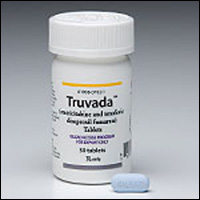
  • Reyataz (atazanavir), boosted with Norvir (ritonavir) and Truvada (tenofovir/emtricitabine)
  • Prezista (darunavir), boosted with Norvir (ritonavir) and Truvada (tenofovir/emtricitabine)
  • Isentress (raltegravir) and Truvada (tenofovir/emtricitabine)
Only four regimens are preferred.  Does not mean that other combinations cannot be used?  No, and some other regimens are considered alternative or acceptable regimens.  In some instances, a different regimen might be the best one for you.

How does your doctor find the best regimen for you?  First of all, he or she should talk it over with you and find out what's most important to you.  For instance, some people prefer to take a single pill, and this would narrow down your choices immediately.  For others, the ability to take all of their medications once a day is important.  Your provider will also consider your other medications and the possibility for interactions, other health conditions, and your resistance test results.

Have a great weekend, y'all!
Yours,
Bill

Monday, April 9, 2012

I'm still digesting my Easter dinner today, but had a wonderful weekend with my partner and family.

There are a few other instances when you should start HIV medications immediately, no matter what your CD4 count is:
  • If you are pregnant, to prevent infection of the baby.
  • If you have had an AIDS-defining illness, such as Pneumocystis jirovecii pneumonia (used to be known as PCP pneumonia), wasting syndrome (extreme unintentional weight loss), or Kaposi sarcoma (purple splotches on the skin).
  • If you HIV-associated kidney disease
  • If you also have hepatitis B and HIV.
Tomorrow:  What are the recommendations medications to treat HIV in someone never on medication?

Have a great Monday!

Yours,
Bill

Friday, April 6, 2012

When to Start HIV Medications, Continued

HIV Particle

Today I'm continuing the discussion on when to start ART (antiretroviral therapy) for HIVAccording to most recent US DHHS Guidelines, most people with HIV should start ART.  If your CD4 (helper count) is less than 500, starting therapy is strongly recommended.  If your CD4 is greater than 500, starting is also recommended, although this remains somewhat controversial until more studies are completed.

In addition, if you are over the age of 50, it is now recommended that you start ART regardless of CD4 count.  This is because of a greater risk of non-AIDS complications in this age group.  Additionally, the body's immunologic response to ART may not be as robust in this age group.

  • You should also start on HIV medications if you are:
  • pregnant
  • have a history of an AIDS-defining illness
  • HIV-associated kidney disease
  • infection with both HIV and hepatitis B.

Tomorrow, more on AIDS-defining illnesses.

Wishing you health!
Bill

Thursday, April 5, 2012

When Starting Medications for HIV, When is the Right Time?

Starting HIV medication is a big decision when you are HIV positive.  Some people say start right away, others say wait.  What is the right answer?

The answer is:  It depends!

According to the recently updated DHHS Treatment Guidelines for adults and adolescents with HIV, treatment is now recommended for everyone with HIV, regardless of their CD4 (helper cell) count:

1.  When your CD4  is less than 350, start treatment as soon as possible-evidence clearly supports starting medications.
2.  When your CD4 is 350-500, starting is recommended.
3.  When your CD4 is greater than 500, starting is recommended, although some questions remain.

  • In addition, you should start after you have insurance or a way to pay for your medications, because they are costly.  
  • You must be ready and committed to taking HIV medications daily-breaks in therapy are not recommended. 
  • If you are sexually active, taking HIV medication will reduce the risk that you will transmit HIV to your parter, so this may also influence your decision to start medication.

Talk to your provider about the right time to start HIV medication.  There are other times when you should start HIV medication, and I'll write about them tomorrow.
Yours,
Bill

Wednesday, March 7, 2012

HIV Medication Adherence Tip #6: Develop a Routine

Daily adherence with HIV medications  is the key to bringing your viral load down to low or undetectable levels, which will  dramatically improve your chances of staying healthy and living a full life.  I have noticed that the clients who struggle the most with taking daily medications are the ones who live without routines. 
Here is my latest tip for improving your HIV medication adherence:

Tip #6:  Develop a daily routine or ritual for taking your HIV medications.

Do you go to bed a different time every night?  Get up whenever you wake up?  Eat meals at various times when you feel like it?  Vary you schedule every day?  If this describes you, you will likely have difficulty remembering to take HIV medications every day.

It is best to take HIV medications at about the same time every day, within a four-hour window.  You don't want to give your virus a chance to grow, which is what happens when there is not enough medication in your blood stream to shut it down.  This can happen when you vary your dosing times by too many hours, say 6 AM one day and midnight the next day.

If you find that you are forgetting your medications, develop a routine for success.  Here are some tips:
English: YULU, Nicaragua (Aug. 23, 2008) Lt. A...
Image via Wikipedia.  I hope your medication
 set-up does not look like this!

1.  Take your medications at meal time, and establish a set time for eating daily.  Breakfast and dinner time are usually good times to take medications.   Not only will you have better lab results for your HIV, you will also feel better throughout the day, because you are providing your body the fuel it needs to perform its best.

Here's a sample morning routine:
6:30 AM  Get up, shower and dress.
7:00 AM Morning coffee, eat breakfast, take medications
7:30 Work or school

2.  Take your medications at bedtime, if this is easier for you.  Keep your medication organizer near your toothbrush where you will see it.

3.  Have a favorite TV show that you watch every day?  You could take your medications while watching the program, but you have to do it every day.

4.  Is there somebody you chat with every day?  You could take your medications while you talk to them.  You could even ask them to remind if you to take your medications.

5.  Create a checklist for each day and make a check when you take your medications. Keep the checklist visible, such as on the refrigerator or bathroom mirror. Keep track of how you do from week to week, and strive for missing less than 1-2 doses per month.

They say if you can do something every day for a month, it will become a habit.  Taking your medications every day is a very good habit to develop.  That's it for today.  Have a great weekend!

Wishing you health in 2012!
© William L. Larson, Pharm.D. 2012

Tuesday, March 6, 2012

Adherence Tip #5: Choose Your Pharmacy Carefully

Daily adherence with HIV medications  is the key to bringing your viral load down to low or undetectable levels, which will dramatically improve your chances of staying healthy and living a full life.  Simple, right?  Not really.  Here is my latest tip for improving your HIV medication adherence.

Tip #3:  Use one pharmacy, preferably one that specializes in HIV.
Make your pharmacy staff allies in helping you to succeed with your HIV medications.  Use a single pharmacy for all of your medications.  This cuts the chance of taking interacting medications, because the single pharmacy will know about all of your medications.  It also makes it easier to keep track of refills and insurance changes.

Pharmacy
Image by sonyaseattle via Flickr
I suggest you choose your pharmacy carefully.  Some pharmacies do a better job of caring for people with HIV than others.  Why is this?  If you go to a pharmacy that serves few people with HIV, they are less likely to have your medications in stock.  This could result in a delay in getting your refills, which might cause you to run out of medication.  Remember, the goal of HIV therapy is no missed doses.

Another reason to choose a pharmacy specializing in HIV is the pharmacist will have a better grasp on HIV and its current treatment.   For example,  HIV is controlled with a combination of three or more medications in most instances, and your pharmacist must give you the complete regimen every month for it to be succesful.

Walgreens
Image via Wikipedia
In Minneapolis where I live, I often refer people to Walgreen's Specialty Pharmacy and Bioscrip.  Other pharmacies also do a good job with HIV, but I know these two pharmacies give excellent service.  Not every Walgreen's is a specialty pharmacy, nor do they all HIV expertise, however, so ask the pharmacist before giving them your prescriptions.  Walgreen's has certified 500 of their pharmacies in the US as HIV Centers of Excellence.

Here are some ways to help your pharmacy give you the best care:
1.  Carry your insurance information so that your are charged correctly.
2.  Call in your refills a week in advance, if possible.
3.  Take advantage of free delivery service if available, especially if you tend to run out of medications.
4.  Ask if they will alert you when it is time for refills.
5.  Walgreens has an app which allows you to order refills from your iPhone.

I hope this tip helps you with your medication adherence.  Stay tuned in coming days for more tips.
Wishing you health in 2012!

© William L. Larson, Pharm.D. 2012

Wednesday, February 15, 2012

HIV Medication Tip #4: Automate your reminders

I started a new series on tips for improving your adherence with HIV medications recently.  Daily adherence with medications  is the key to bringing your viral load down to low or undetectable levels, which will dramatically improve your chances of staying healthy.  Taking your HIV medication daily also drastically reduces the chances you will spread it to anyone else.

When my clients admit they missed a few HIV medication doses, the most frequent reason is “I forgot.”  They didn’t mean to miss.  It just happened.  Maybe them came home late and when straight to bed.  Or maybe they were busy working on a project and became distracted and forgot all about their medications.

Tip #4:  Use a reminder device, such as the alarm feature on your smart phone or an alarm watch.

If you have a smart phone and like to use its myriad features, this is easy!  Just set one or more daily alarms to take your medications.  Pick times of day that are convenient for you to take your medications.   Usually picking times around meal times or bedtime work best.  Then as soon as the alarm goes off, take your medications.  It’s that easy.

I recently started using a free phone app called iStay Healthy to send discrete reminders to my phone to take my medications.  It has several features which I like, including the ability to chart your CD4 counts and viral load.  You can also enter the names (generic and brand) and dosages of your medications, as well as pictures of your medications for easier identification.

If you prefer, you can get an alarm watch and set the daily reminder alarms.  Here are two watches that I like a lot, both from Timex.  One is for men, and the other is for women.  These watches are durable and easy to set.  You can get them from Amazon.com.  They cost about $35.

One more thing.  If you miss your dose at your usual time in spite of your best efforts, don’t despair.  Take them when you remember it.  It’s better to be a little late than to miss them completely.  If you are within six  hours of your regular dosing time, just let it go and get back on track at your usual time.  Do not double your dose.  If you take Atripla, you may wish to avoid taking it in the morning before you go to work.  The central nervous system side effects of dizziness and drowsiness, while usually not a problem during the night while you are asleep, may become a problem if your take it before going to work.

Wishing you health in 2012!
Bill

© William L. Larson, Pharm.D. 2012
Follow me on Twitter:  WillLars
Follow me on FaceBook:  William Larson, Pharm.D.

Tuesday, January 31, 2012

New Series:Bill's #3 Adherence Tip for Success with HIV Medications

I started a new series on tips for improving your adherence with HIV medications recently.  Daily adherence with medications  is the key to bringing your viral load down to low or undetectable levels, which will dramatically improve your chances of staying healthy and living a full life.  We now know that taking HIV medications daily dramatically reduces the chances you will give the virus to others.

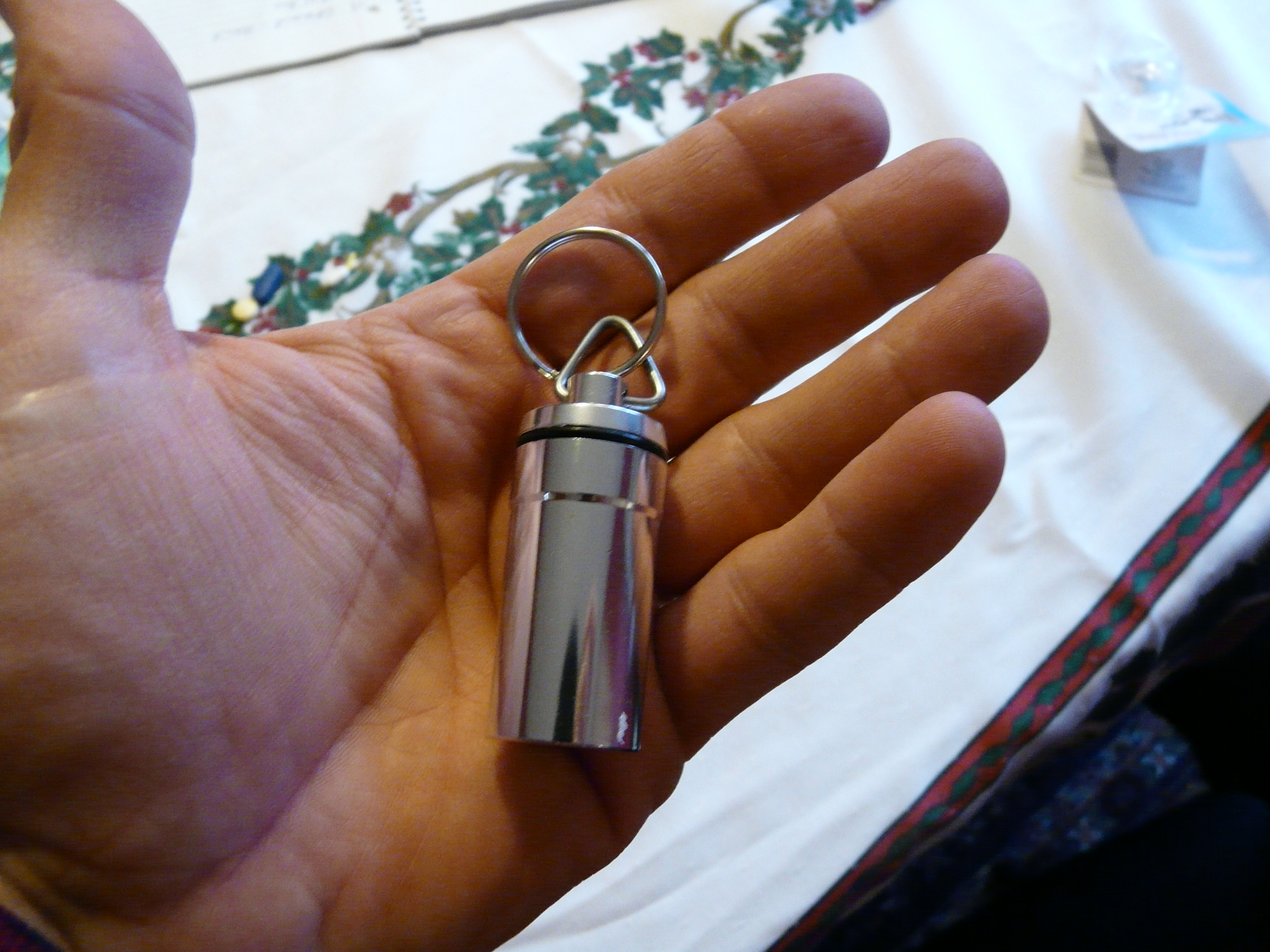
Tip #3:  Use a key-chain medication holder.

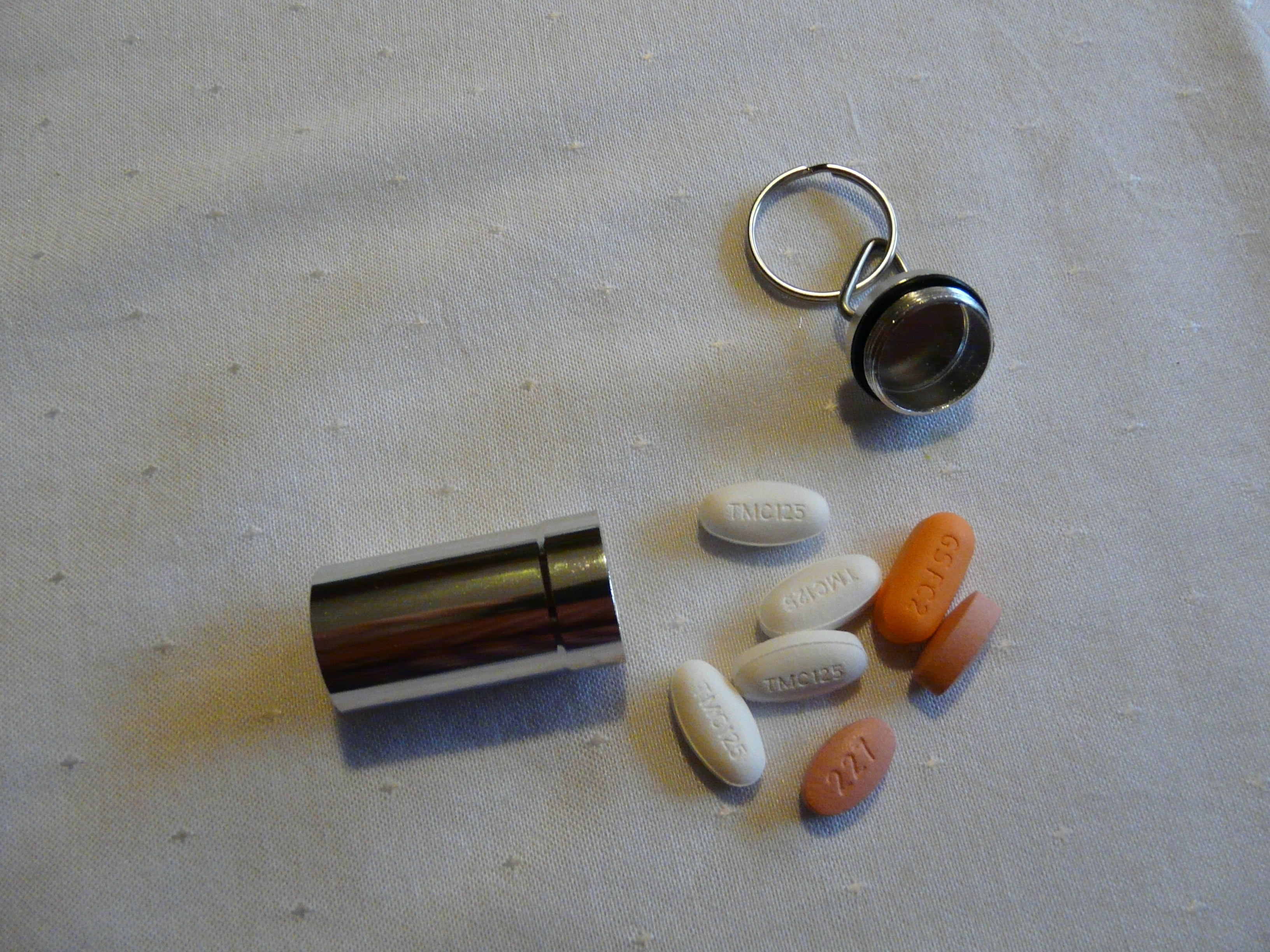
I give this little device to nearly all my clients.  I prefer the metal holders, because they are more durable than plastic.  I recommend you keep a spare dose or two of your HIV medications in it, and put it on your key chain.  Most people take their keys when they leave home, so you'll always have your medications with you if you do this.   It is so simple, it's ridiculous, but it works!

Let's face it.  Things happen.  You run out the door in the morning without taking your medications.  You have a late evening out with friends.  You decide to spend the night with your family.   If you don't have a spare dose of medication with you, you are out of luck and you'll miss your dose.
A key-chain medication holder is like an insurance policy.  You may never need it, but you'll be glad you have it if you find yourself far from home without your medications.

I confess:  I've recommended these key chain medication holders for years, but never used one myself.  Today I decided I needed to finally change that.   Here's my holder with a full day's dose of HIV medications!

There's a lot more to come in 2012, so please stay tuned.

Wishing you health!

Bill


Follow me on Twitter:  WillLars
FaceBook:  William Larson, Pharm.D.

© William L. Larson, Pharm.D. 2012

Wednesday, January 25, 2012

Free Nutritional Supplements Available

From Positively Aware e-news (http://www.positivelyaware.com/2012/news_briefs/news_briefs_12_01_04.shtml#4 comes this information about free supplements from Expert Nutrition (except for shipping).  I can not personally endorse all of these products, and I would suggest checking with your provider and/or pharmacist before starting a new supplement.  Some supplements can interact with HIV medications.  I can endorse ginger, which is a great way to settle nausea and motion sickeness.

Free Nutritional Supplements Available
Expert Nutrition (formerly Houston Buyers Club) is giving away free nutritional supplements. In an e-mail sent out on January 18, the agency said, “Himalaya Herbal Healthcare has provided some free products to our agency that they would like us to distribute to our community at no charge. If you would like them shipped to you, shipping charges will be displayed on your shopping cart. If you order online, there is no limit to how many you can order; however, if you live in the Houston area, we are limiting walk-in customers to four bottles in any combination.”
To place an order online, click here.  If you live in the Houston area and would like to pick up some free Himalaya products, please visit Expert Nutrition (formerly Houston Buyers Club), 3224 Yoakum Blvd., Houston, TX  77006.
There are different nutritional supplements and body care items that might help manage the following conditions, among others:
  • Heart health, cholesterol, and blood pressure
  • Libido support
  • Weight loss and appetite support
  • Bone health support
  • Memory support
  • Immune & white blood cell structure support
  • Relaxation  (including massage oil)
  • Digestive function
  • Body care lotions
Expert Nutrition urges people to share this announcement on Facebook and other social networks.

Tuesday, January 24, 2012

New Series: Bill's #2 Adherence Tip for Success with HIV Medications

I started a new series on tips for improving your adherence with HIV medications last week.  Daily adherence is the key to bringing your viral load down to low or undetectable levels, which will dramatically improve your chances of staying healthy.

Tip #2:  Use a medication organizer to stay on track.

 
I know what you're saying.  "What's so important about a medication organizer?  Isn't that what my grandma uses?  I'm only on one pill, so why would I need that?"

Even a simple HIV regimen consisting of one pill once a day is easy to screw up.  Just think of all the distractions you face daily:  school, work, family, spouse, partner, social life, children.   Remembering to take medication every single day is daunting.

A simple pill-box can make it easier.  You fill it up once a week, you take your pills from the correct section each day, and you will stay on track.  No more guessing:   Did I take them today?  Just remember to leave the organizer out in a place where you'll see it,  such as next to your toothbrush or coffee pot.
Medication organizers come in several shapes and sizes.  Here are a few of my favorites for my clients:
If you take medication once a day, this might be the one for you: 
If you take medications twice a day, this one works great.  You can even pop out a section for each day to take with you.

If you are taking medications throughout the day, this organizer works well.  It also comes apart.

This organizer comes in its own case, which is great for traveling or if you looking for something more discreet.


So that's it for tip #2  : Tip #2:  Use a medication organizer to stay on track.  This simple device could dramatically improve your medication adherence.  Stay tuned for more tips in the days to come.
Wishing you health,
Bill
© William L. Larson, Pharm.D. 2012

Thursday, January 12, 2012

New Series on Medication Adherence: Tip #1 Admit You Have It

Wikipedia. Red Ribbon hanging in
 the Portico of the White House
Today I am starting a new series on tips for improving your adherence with HIV medications.  Adherence is simply the ability to take all of your HIV medications, in the correct dose, and at the correct time, every single day.  Sound easy?  It's usually not, even for veteran pill takers like myself.
Tip #1:  Admit that you have HIV if you test positive, and you will likely need to treat it with HIV medications now or in the future.

I chose this as my first tip because denial of  infection is a fundamental issue that can needlessly delay treatment, resulting in illness and disability.  Have your heard yourself say or think something like:

"I don't really believe I have HIV. There must be some mistake."

"Why me?  What did I do wrong?  I don't deserve this."

"I don't want to even think about this.  If I pretend it doesn't exist and don't talk about it, it will just go away."

While we lull ourselves into a state of denial, the virus is steadily working behind the scenes to destroy our immune systems, a few CD4 cells at a time.  The virus doesn't care who gave it to us or whether you believe it exists or not.
The good news is that the current HIV medications work great if you take them correctly.  They are generally tolerated very well with minimal side effects.  If you can stay well now,  you will be here when better medications come along in the future.  By admitting you are infected and starting HIV medication when advised, you are paving the way for a longer, healthier life, even with HIV.

So it may be time to face the facts:  You probably really have HIV if your test came back positive.   No, it isn't fair that you are infected.  And no, you don't deserve this.  But rather than wallowing in self-pity, and I find it more energizing and affirming to take charge of the situation.
So that's it for tip #1  : Admit that you have HIV and you will mostly likely need to treat it with medications now or in the future.    Stay tuned for more tips in the days to come.

Wishing you health,

Bill

© William L. Larson, Pharm.D. 2012