Showing posts with label Atripla. Show all posts

Friday, April 13, 2012

What Medicines are Recommended for Starting HIV Treatment?

This week flew by quickly.  I'm starting a new fellowship to reduce HIV in African Americans, and I'm very excited about it.  I will be telling you about it in weeks to come.  It's with The Black AIDS Institute.  What a great organization!
I wrote about when to start HIV medications earlier in the week.  Today I want to tell you which medications to start.  Actually, these are the recommendations from HIV experts working with the Department of Health and Human Services, and they were just updated.

Here are the suggested regimens for treatment-naive people with HIV, which means no previous HIV medications.
  • Atripla, a one pill a day combination of efavirenz/tenofovir/emtricitabine
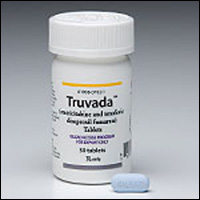
  • Reyataz (atazanavir), boosted with Norvir (ritonavir) and Truvada (tenofovir/emtricitabine)
  • Prezista (darunavir), boosted with Norvir (ritonavir) and Truvada (tenofovir/emtricitabine)
  • Isentress (raltegravir) and Truvada (tenofovir/emtricitabine)
Only four regimens are preferred.  Does not mean that other combinations cannot be used?  No, and some other regimens are considered alternative or acceptable regimens.  In some instances, a different regimen might be the best one for you.

How does your doctor find the best regimen for you?  First of all, he or she should talk it over with you and find out what's most important to you.  For instance, some people prefer to take a single pill, and this would narrow down your choices immediately.  For others, the ability to take all of their medications once a day is important.  Your provider will also consider your other medications and the possibility for interactions, other health conditions, and your resistance test results.

Have a great weekend, y'all!
Yours,
Bill

Wednesday, February 15, 2012

HIV Medication Tip #4: Automate your reminders

I started a new series on tips for improving your adherence with HIV medications recently.  Daily adherence with medications  is the key to bringing your viral load down to low or undetectable levels, which will dramatically improve your chances of staying healthy.  Taking your HIV medication daily also drastically reduces the chances you will spread it to anyone else.

When my clients admit they missed a few HIV medication doses, the most frequent reason is “I forgot.”  They didn’t mean to miss.  It just happened.  Maybe them came home late and when straight to bed.  Or maybe they were busy working on a project and became distracted and forgot all about their medications.

Tip #4:  Use a reminder device, such as the alarm feature on your smart phone or an alarm watch.

If you have a smart phone and like to use its myriad features, this is easy!  Just set one or more daily alarms to take your medications.  Pick times of day that are convenient for you to take your medications.   Usually picking times around meal times or bedtime work best.  Then as soon as the alarm goes off, take your medications.  It’s that easy.

I recently started using a free phone app called iStay Healthy to send discrete reminders to my phone to take my medications.  It has several features which I like, including the ability to chart your CD4 counts and viral load.  You can also enter the names (generic and brand) and dosages of your medications, as well as pictures of your medications for easier identification.

If you prefer, you can get an alarm watch and set the daily reminder alarms.  Here are two watches that I like a lot, both from Timex.  One is for men, and the other is for women.  These watches are durable and easy to set.  You can get them from Amazon.com.  They cost about $35.

One more thing.  If you miss your dose at your usual time in spite of your best efforts, don’t despair.  Take them when you remember it.  It’s better to be a little late than to miss them completely.  If you are within six  hours of your regular dosing time, just let it go and get back on track at your usual time.  Do not double your dose.  If you take Atripla, you may wish to avoid taking it in the morning before you go to work.  The central nervous system side effects of dizziness and drowsiness, while usually not a problem during the night while you are asleep, may become a problem if your take it before going to work.

Wishing you health in 2012!
Bill

© William L. Larson, Pharm.D. 2012
Follow me on Twitter:  WillLars
Follow me on FaceBook:  William Larson, Pharm.D.

Tuesday, November 29, 2011

New One Pill Choice for HIV Available


Recently, the FDA announced approval of a new one pill, once-a-day drug regimen for HIV: Complera.
What’s Complera? It combines rilpivirine (Edurant), a new HIV medication from the NNRTI class, and Truvada (tenofovir and emtricitabine), a commonly used combination pill. It will compete with Atripla, the other one pill once-a-day option (efavirenz and Truvada).
Is Complera better than Atripla? Complera’s effectiveness is “non-inferior,” meaning “just as good,” in people with pre-treatment viral loads less than 100,000.
Study participants with higher pretreatment viral loads (>100,000 copies/mL),were more likely to fail on Complera, however. Doctors call this “virologic failure.” If Complera fails to control your HIV, and viral resistance develops, it might also eliminate Intelence and Viramune as future drug possibilities. Doctors call this “cross resistance.” This is not a good thing.
Remember that viral resistance does not happen all by itself. The number one reason for a failing HIV drug regimen is missing too many doses.
Complera causes fewer central nervous side effects, such as dizziness and dreams, than Atripla. If you are experiencing these side effects from Atripla, Complera may be an excellent option for you.
There are some unique features of Complera that make it a bad choice for some. You must eat when you take it, preferably a high fat meal, to absorb it adequately. Drinking a can of Ensure was found to be inadequate.
It’s ALSO not absorbed well if you are taking acid lowering medications, such as antacids or Zantac. Prilosec (omeprazole) or similar acid blockers can NOT be used with it.
In the updated DHHS “Guidelines for the Use of AntiretroviralAgents in HIV-1 Infected Adults and Adolescents,” Complera is an “alternative” treatment for HIV, and Atripla is still “preferred.”
Complera is approved for use for people with HIV who have not been other previous treatements for it. Studies are underway to see if people on other HIV medications can be safely switched to Complera. The providers I work with are quite comfortable switching their patients to Complera if they are well controlled on their current regimen.
So what’s the bottom line?
Complera is a great new choice for HIV, but it will not replace Atripla. Complera causes less dizziness and dreams than Atipla. If you have a high viral load, tend to miss doses, eat irregularly, or take acid-lowering stomach medication, Atripla is still a better choice for you.